
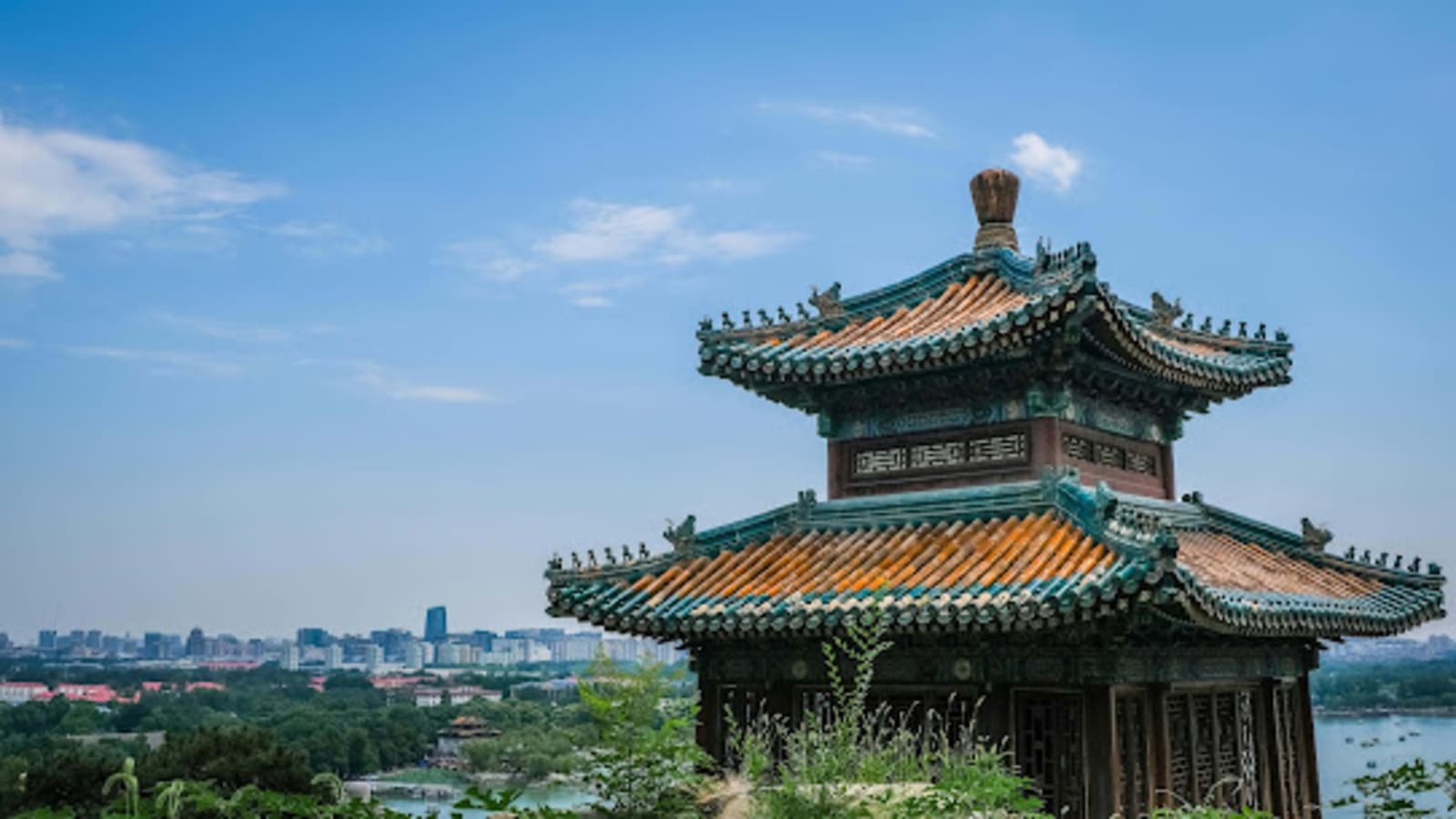
Top Attractions in Beijing: Best Places Every Traveler Should Visit
Beijing is the kind of city that doesn’t just appear on your itinerary – it takes over your entire trip. It’s a place where ancient emperors once ruled behind crimson palace walls, where locals still play chess in traditional alleyways, and where futuristic skyscrapers light up the night sky. As China’s capital, Beijing combines imperial history, powerful modern architecture, and rich street life in a way that feels both overwhelming and addictive.
If you’re planning your first visit, you’re probably asking the same question as every traveler: What are the must-see places in Beijing? This guide dives into the top attractions and neighborhoods you shouldn’t miss – from UNESCO World Heritage Sites like the Forbidden City, Summer Palace, and Temple of Heaven to creative hubs like the 798 Art District and traditional hutong lanes such as Nanluoguxiang.
You can easily spend a week exploring Beijing, but even if you only have a few days, this extended guide will help you prioritize the best attractions in Beijing, understand what makes each place special, and see how they fit into a smart itinerary.
Why Beijing Belongs on Every Traveler’s Bucket List
There are many reasons Beijing consistently appears among the world’s top city destinations:
- World-class heritage: The city is home to several UNESCO sites, including the Forbidden City, the Temple of Heaven, the Summer Palace, and nearby sections of the Great Wall.
- Incredible contrasts: It’s one of the few cities where you can visit a 600-year-old palace in the morning and sip specialty coffee in a converted factory art district in the afternoon.
- Food culture: From traditional Peking duck to street snacks in bustling hutongs, Beijing is a destination that will keep your tastebuds busy.
- Easy to navigate for travelers: With a modern metro, convenient mobile payments, and countless tours, it’s surprisingly straightforward once you understand the basics.
Let’s walk through the main places you should include in your Beijing travel plan, neighborhood by neighborhood.
1. Forbidden City – The Heart of Imperial Beijing
If there’s one attraction that defines Beijing, it’s the Forbidden City, also known as the Palace Museum. For centuries, this enormous palace complex served as the home of China’s emperors and the political center of the empire. Today it remains one of the largest and best-preserved imperial palace complexes in the world and a top highlight for almost every visitor to Beijing.
Why the Forbidden City Is a Must-See
Walking through the Forbidden City feels like stepping into a movie set, except everything is real. You’ll cross huge courtyards, climb over marble bridges, and pass through gate after gate painted in deep red and decorated with golden details. The main halls follow a perfect north–south axis, reflecting traditional Chinese principles of symmetry and balance.
Beyond its grand architecture, the Forbidden City is filled with symbols. Colors, numbers, and animal statues on rooftops all reflect beliefs from Chinese cosmology and imperial protocol. Exploring slowly, you’ll begin to notice dragons, phoenixes, and mythical creatures carved or painted everywhere, each of them telling part of the story of power and protection for the emperor.
Highlights Inside the Forbidden City
- Meridian Gate (Wumen): The main entrance for visitors and the largest gate of the palace. Walking through it is a dramatic way to begin your visit.
- Hall of Supreme Harmony (Taihe Dian): The most important building, where emperors held ceremonies. It stands on a triple-tiered marble terrace and is one of the most photographed spots in Beijing.
- Inner Court: The residential part of the palace, where you can see smaller, more intimate halls and imagine daily life for the imperial family.
- Imperial Garden: At the northern end, this garden offers rockeries, old cypress trees, and a welcome dose of shade in summer.
Travel Tips for Visiting the Forbidden City
- Tickets: Tickets must often be reserved in advance using real-name registration, especially during peak seasons and holidays.
- Best time to go: Arrive early in the morning to avoid crowds and harsh midday light if you like photography.
- How long to spend: Plan at least 3–4 hours for a relaxed visit. History lovers can easily spend an entire day here.
- Combine with: The Forbidden City pairs perfectly with Tiananmen Square (just south) and Jingshan Park (just north), where a short climb gives you a fantastic panoramic view over the entire palace roofline.
2. Tiananmen Square – The Symbolic Center of Modern China
Just outside the southern gate of the Forbidden City stretches Tiananmen Square, one of the largest public squares in the world. This vast open space has witnessed many key moments in modern Chinese history and remains a powerful symbol of the country.
What to See on Tiananmen Square
- Tiananmen Gate (Gate of Heavenly Peace): The iconic gate with a portrait of Mao Zedong is one of Beijing’s most photographed landmarks. It marks the traditional southern entrance to the imperial city.
- Monument to the People’s Heroes: A tall granite obelisk at the center of the square, dedicated to those who fought in revolutionary struggles.
- Great Hall of the People: On the western side, this building hosts major political meetings and national events.
- National Museum of China: To the east, this enormous museum covers everything from ancient archaeology to modern history, and is worth several hours if you’re interested in Chinese culture.
Tiananmen Square is at its most atmospheric at sunrise, when you can watch the flag-raising ceremony, or in the evening when the surrounding buildings glow with warm light.
3. The Great Wall of China (Mutianyu & Badaling Sections)
No Beijing trip is complete without a day trip to the Great Wall of China. While the wall stretches across northern China, several well-restored sections can be reached as a day trip from Beijing. The most popular sections for first-time visitors are Badaling and Mutianyu.
Badaling: The Classic Great Wall Experience
Badaling is the most famous and most visited section of the wall. It’s well restored, has cable cars, and offers broad, easy-to-walk sections with sweeping views of the mountains.
- Pros: Convenient access, plenty of facilities, and gentle walking options.
- Cons: It can be extremely crowded, especially on weekends and public holidays.
Mutianyu: Great Views with Fewer Crowds
Many travelers consider Mutianyu the ideal balance between scenery and comfort. It’s also well restored and has both cable car and chairlift/toboggan options, but tends to be less crowded than Badaling. Tour operators frequently include Mutianyu on “must-see in two days” itineraries from Beijing.
Tips for Visiting the Great Wall from Beijing
- Plan a full day: Even the closest sections will take half a day including transport. Don’t try to squeeze too much else into the same day.
- Dress for the weather: Summers can be hot and humid, while winter trips can be icy and windy. Layers, good footwear, and sun protection are essential.
- Go early or late: To avoid tour group crowds, aim for early morning or late afternoon visits when possible.
- Consider a private tour: If your time is limited, a small-group or private tour can save you a lot of logistics stress.
4. Temple of Heaven – Where Emperors Prayed for Good Harvests
South of the city center lies the Temple of Heaven, a masterpiece of Ming dynasty architecture and another UNESCO World Heritage Site. This complex of ceremonial buildings was where emperors performed annual rituals to pray for good harvests and harmony between heaven and earth.
What Makes the Temple of Heaven Special
The most famous building here is the Hall of Prayer for Good Harvests, a circular, triple-roofed wooden structure standing on a large marble terrace. Its deep blue roof tiles symbolize heaven, and the building’s design is rich with numerological symbolism – many elements are grouped in threes and nines, numbers associated with heaven and the emperor.
The surrounding park is just as fascinating as the temples. In the early morning, local residents gather to practice tai chi, play traditional instruments, and dance. Visiting at this time gives you a vivid picture of everyday life in Beijing.
Temple of Heaven Travel Tips
- Best time to visit: Early morning for local life, or late afternoon for softer light.
- Combine with: The Temple of Heaven is often combined with visits to the Summer Palace or city-center attractions since it’s easy to reach by subway.
- How long to spend: Plan 2–3 hours to walk through the ceremonial halls and relax in the park.
5. Summer Palace – Beijing’s Lakeside Escape
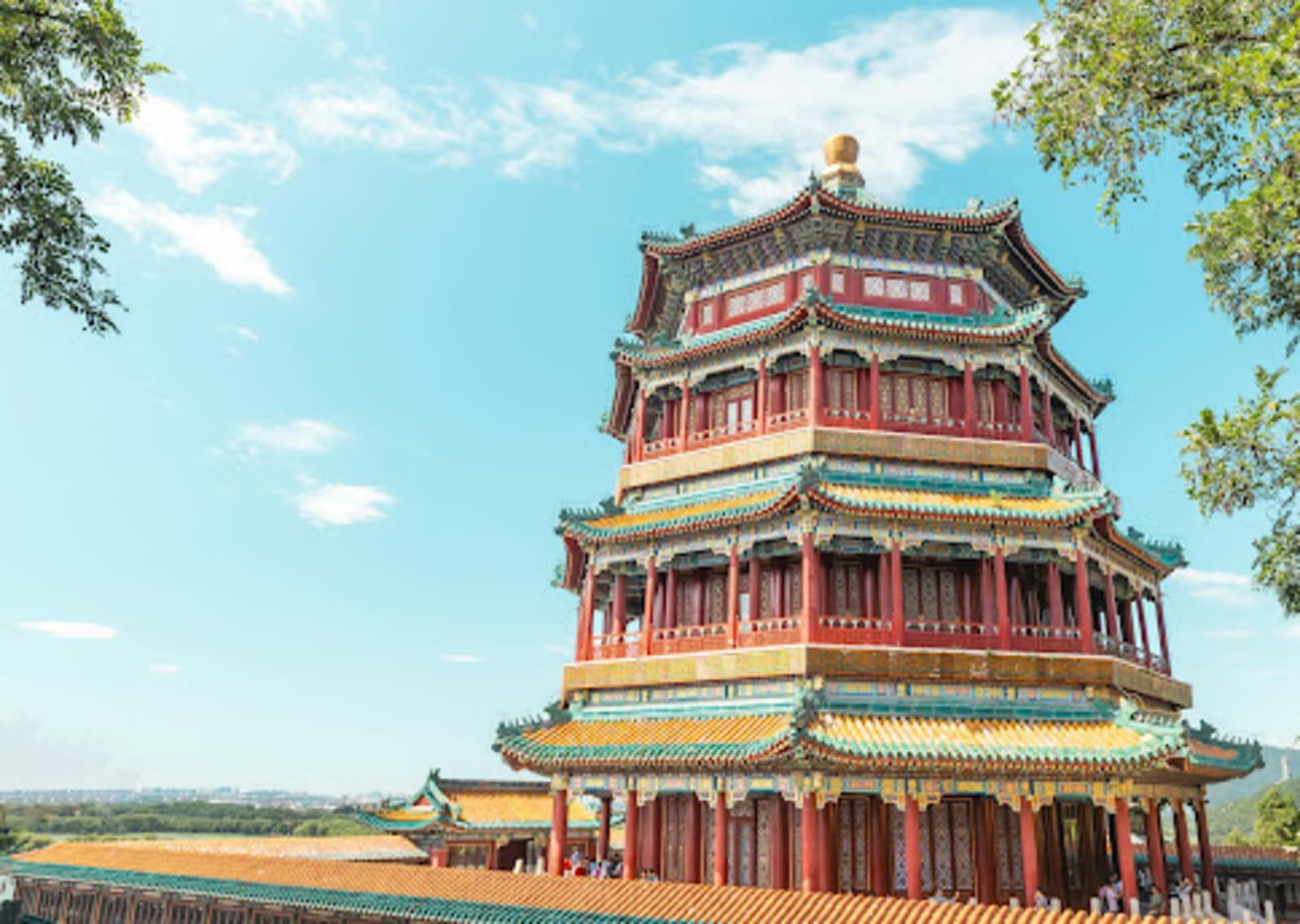
When Beijing’s summer heat becomes intense, locals and tourists alike head to the Summer Palace. This vast imperial garden complex lies northwest of the city center and is centered around Kunming Lake and Longevity Hill. It served as a summer retreat for emperors and is now one of the most popular attractions in Beijing for its beautiful scenery and traditional architecture.
Highlights of the Summer Palace
- Longevity Hill: Climb the hill for panoramic views over the lake and the distant city skyline.
- Long Corridor: A covered walkway stretching hundreds of meters along the lake shore, decorated with thousands of colorful paintings.
- Marble Boat: A quirky lakeside pavilion shaped like a boat, used historically as a place to relax and entertain guests.
- Kunming Lake: In summer you can rent paddle boats; in winter you might see parts of the lake freezing over, creating a completely different atmosphere.
How to Make the Most of Your Visit
- Allow time for walking: The Summer Palace covers a huge area. Wear comfortable shoes and be prepared for stairs and uneven paths.
- Photo opportunities: Sunset views from the hill or across the lake are unforgettable, especially when the pavilions and pagodas are silhouetted against the sky.
- Combine with: Many itineraries pair the Summer Palace with the Old Summer Palace (Yuanmingyuan) ruins or with university areas like Tsinghua and Peking University nearby.
6. Hutongs and Courtyard Life – Discovering Old Beijing
Beyond palaces and parks, one of the best ways to understand Beijing is by wandering through its hutongs – traditional alleyways lined with low courtyard houses. Some hutong areas have been heavily modernized, while others still preserve a slower, neighborhood feel.
Nanluoguxiang: The Most Famous Hutong Street
Nanluoguxiang is one of Beijing’s oldest and most popular hutongs, with a history of more than 700 years. Today its narrow central lane is lined with cafes, boutique shops, snack stalls, and small bars. Side alleys branch off like a fishbone, leading to quieter residential lanes and traditional siheyuan (courtyard houses).
As you wander Nanluoguxiang, you can grab a bubble tea or traditional yogurt drink, try local street foods, and pick up souvenirs like calligraphy brushes or quirky T-shirts. In the evening, the street lights up and fills with both locals and visitors; it’s a fun place to experience Beijing’s nightlife on a smaller, more intimate scale than the big clubs elsewhere in the city.
Other Hutong Areas to Explore
- Shichahai & Houhai Lakes: A scenic area of lakes surrounded by hutongs, restaurants, and bars. You can rent a boat in summer or walk along the frozen lakeside in winter.
- Bell and Drum Towers: Located near many hutong neighborhoods, these towers offer a historic timekeeping perspective and good city views.
- Lesser-known hutongs: East and west of the Forbidden City, you’ll find maze-like alleys that feel far away from the modern city, especially in the early morning.
Tips for Experiencing Hutong Culture
- Consider a walking or cycling tour: Local guides can show you hidden courtyards and explain the history behind architectural details.
- Respect residents: Many hutongs are still residential areas. Ask before photographing people or private homes.
- Try local snacks: Look for small stalls selling jianbing (savory crepes), skewers, or traditional desserts.
7. 798 Art District – Beijing’s Creative Playground
If you love contemporary art, design, and creative spaces, don’t miss the 798 Art District, also known as the Dashanzi Art District. Built in and around a former factory complex from the 1950s, this neighborhood has been transformed into a trendy hub of galleries, studios, cafes, and street installations.
What to Expect in 798 Art District
Graffiti-covered walls, giant outdoor sculptures, and industrial-style exhibition halls make 798 feel like a giant open-air museum. The area is spread out over about 60 hectares and is home to both cutting-edge galleries and more commercial design shops.
- Galleries and museums: You’ll find everything from experimental installations to photography shows and Chinese contemporary painting.
- Cafes and restaurants: Stylish coffee shops and eateries make 798 a comfortable place to linger for half a day.
- Shopping: Many design stores sell original accessories, clothing, and art prints – great if you want something more unique than the typical souvenir.
Practical Tips for Visiting 798
- Opening hours: Most galleries are open roughly from 10:00 to 18:00, though hours can vary by venue.
- How to get there: 798 Art District is located in Chaoyang District, northeast of central Beijing, and can be reached by subway, bus, or taxi.
- Time needed: Plan 2–4 hours, depending on how many galleries you want to enter.
8. Beijing Olympic Park – Bird’s Nest, Water Cube & More

Beijing is one of the rare cities that has hosted the Olympic Games twice (Summer 2008 and Winter 2022). The legacy of the 2008 games lives on in the Beijing Olympic Park, a modern complex featuring some of the city’s most recognizable contemporary architecture.
Key Sights in the Olympic Park
- National Stadium (Bird’s Nest): Known for its intricate steel “nest” design, this stadium hosted the opening and closing ceremonies of the 2008 Olympics.
- National Aquatics Center (Water Cube): A cube-shaped building with a bubble-like surface that famously hosted swimming events. At night, the building glows with colorful light.
- Olympic Forest Park: A large green space with walking paths, lakes, and viewpoints – a relaxing place to escape traffic and get some exercise.
Visiting Tips
- Best time to go: Evening is ideal if you want to see the buildings illuminated.
- How to get there: Several subway lines stop near different parts of the park, including Line 8 and Line 10.
- Combine with: You can pair the Olympic Park with a half-day at 798 Art District, since both are in the city’s northeast.
9. Modern Beijing: Skyscrapers, Malls, and Nightlife
While the focus of many itineraries is on historic Beijing, the modern city is just as fascinating. If you want to see the futuristic side of China’s capital, set aside time for districts like Guomao (CBD) and Sanlitun.
Central Business District (CBD)
The Beijing CBD, centered around the Guomao area, is a forest of glass towers, luxury hotels, and corporate headquarters. The skyline includes the distinctive bent shape of the CCTV Headquarters and the soaring China Zun tower – currently the tallest building in Beijing. At night, the cityscape looks especially impressive from rooftop bars and hotel lounges overlooking the main cluster of skyscrapers.
Sanlitun and Taikoo Li – Shopping and Nightlife
Sanlitun, in Chaoyang District, is one of Beijing’s most popular areas for nightlife and international restaurants. The open-air Taikoo Li Sanlitun shopping complex mixes high-end stores with stylish boutiques, while surrounding streets are full of bars and clubs ranging from casual pubs to high-energy dance venues.
Why Modern Beijing Belongs in Your Itinerary
Spending an evening in modern Beijing completes the picture of the city. After walking through centuries of history during the day, it’s surprisingly fun to end the night with craft cocktails, rooftop views, or a casual hotpot meal in a buzzing modern mall.
10. Food Experiences You Shouldn’t Miss in Beijing
Beijing isn’t just about sights; it’s also a world-class food destination. From traditional imperial dishes to street snacks, there’s something for every palate and budget.
Peking Duck – The Iconic Beijing Dish
If there’s one meal you must try, it’s Peking duck. A whole duck is roasted until the skin is crisp and golden, then carved into thin slices that you wrap in pancakes with scallions, cucumber, and sweet bean sauce. Many city tours even highlight a roast duck dinner as an essential Beijing experience.
• 17 iconic dishes that every traveler should try in China
Street Food and Snacks
- Jianbing: A savory breakfast crepe with egg, herbs, and crunchy crackers.
- Roujiamo: Often compared to a Chinese-style burger – chopped meat in a crunchy flatbread.
- Hotpot: Popular in many parts of China, but easy to find all over Beijing, from local joints to upscale chains.
- Traditional desserts: Try tanghulu (candied fruit on a stick) in hutong areas or around tourist streets.
Where to Eat
For first-time visitors, good food neighborhoods include Nanluoguxiang, Wangfujing, Houhai, and Sanlitun. Look for busy spots where locals are lining up – that’s usually a good sign.
Suggested Itineraries: How to Fit the Top Attractions Into Your Trip
With so many things to do in Beijing, it helps to organize your days. Here are two sample itineraries that cover most of the major attractions in a logical way.
Beijing in 3 Days – Classic Highlights
Day 1: Imperial Beijing
- Morning: Tiananmen Square and the Forbidden City
- Midday: Walk up to Jingshan Park for panoramic views of the palace rooftops
- Afternoon: Wander nearby hutongs or head to Nanluoguxiang for street snacks and shopping
- Evening: Dinner in the hutongs or near Houhai Lakes
Day 2: Great Wall Adventure
- Morning: Drive or join a tour to Mutianyu or Badaling Great Wall
- Afternoon: Continue exploring the wall, then return to the city
- Evening: Celebrate with a traditional Peking duck dinner
Day 3: Temples, Parks, and Modern Beijing
- Morning: Visit the Temple of Heaven and watch locals practicing tai chi in the park
- Afternoon: Explore the Summer Palace
- Evening: Head to the Beijing Olympic Park or the CBD and Sanlitun for modern architecture and nightlife
Beijing in 5 Days – Deeper Exploration
If you have more time, you can slow down and add extra experiences.
- Day 4: Spend a half or full day at 798 Art District, then explore nearby malls or parks in Chaoyang District.
- Day 5: Visit lesser-known temples, university campuses, or explore more hutong neighborhoods at your own pace.
Practical Travel Tips for Visiting Beijing
Best Time to Visit Beijing
Beijing has four distinct seasons:
- Spring (April–May): Mild temperatures and blooming trees make it one of the best times to visit, though sandstorms are occasionally possible.
- Autumn (September–October): Generally considered the ideal season – clear skies, comfortable weather, and colorful foliage, especially around the Great Wall and parks.
- Summer (June–August): Hot, humid, and often crowded with domestic tourists, but this is the best time for lake activities and long daylight hours.
- Winter (November–February): Cold and dry, but fewer crowds and a unique atmosphere, especially if you catch snow on the Great Wall or palace roofs.
Getting Around Beijing
- Subway: The metro is extensive, affordable, and usually the fastest way to move around, especially during rush hour.
- Taxis and ride-hailing: Taxis are widely available, and ride-hailing apps are commonly used. Always have your destination written in Chinese characters to show drivers.
- Walking: Some neighborhoods, especially hutong areas and palace complexes, are best explored on foot. Just remember that distances on the map can be larger than they look.
Tickets and Reservations
Many major attractions, particularly the Forbidden City, use online ticketing systems that may require advanced reservations and passport details. Plan ahead, especially during national holidays, summer vacation, or weekends.
Cultural Etiquette Tips
- Respect sacred and historical sites: Avoid loud behavior in temples and be mindful of signs about restricted areas.
- Be patient with crowds: Beijing’s top attractions are extremely popular. Expect lines and practice patience, particularly during peak hours.
- Cashless payments: Mobile payments are very common, though major tourist areas and larger businesses generally accept international cards or cash as well.
Final Thoughts: Making the Most of Beijing’s Top Attractions
Beijing is not a city you can “finish” in a single visit. Even if you spend days wandering its palaces, climbing the Great Wall, getting lost in hutongs, and cafe-hopping through the 798 Art District, you’ll still leave with the feeling that there’s more to discover.
For a first trip, focus on the essentials: the Forbidden City, Tiananmen Square, the Great Wall, Temple of Heaven, Summer Palace, one or two hutong districts like Nanluoguxiang, and a taste of modern Beijing in the Olympic Park or the CBD. Add extra days for art, shopping, or more intimate local experiences if you can.
Whether you are a history lover, an architecture fan, a foodie, or a photographer, Beijing offers a deep and rewarding travel experience. Use this guide as a starting point for your own itinerary, adjust it to your interests, and you’ll be well on your way to exploring the best attractions and places that Beijing has to offer.


